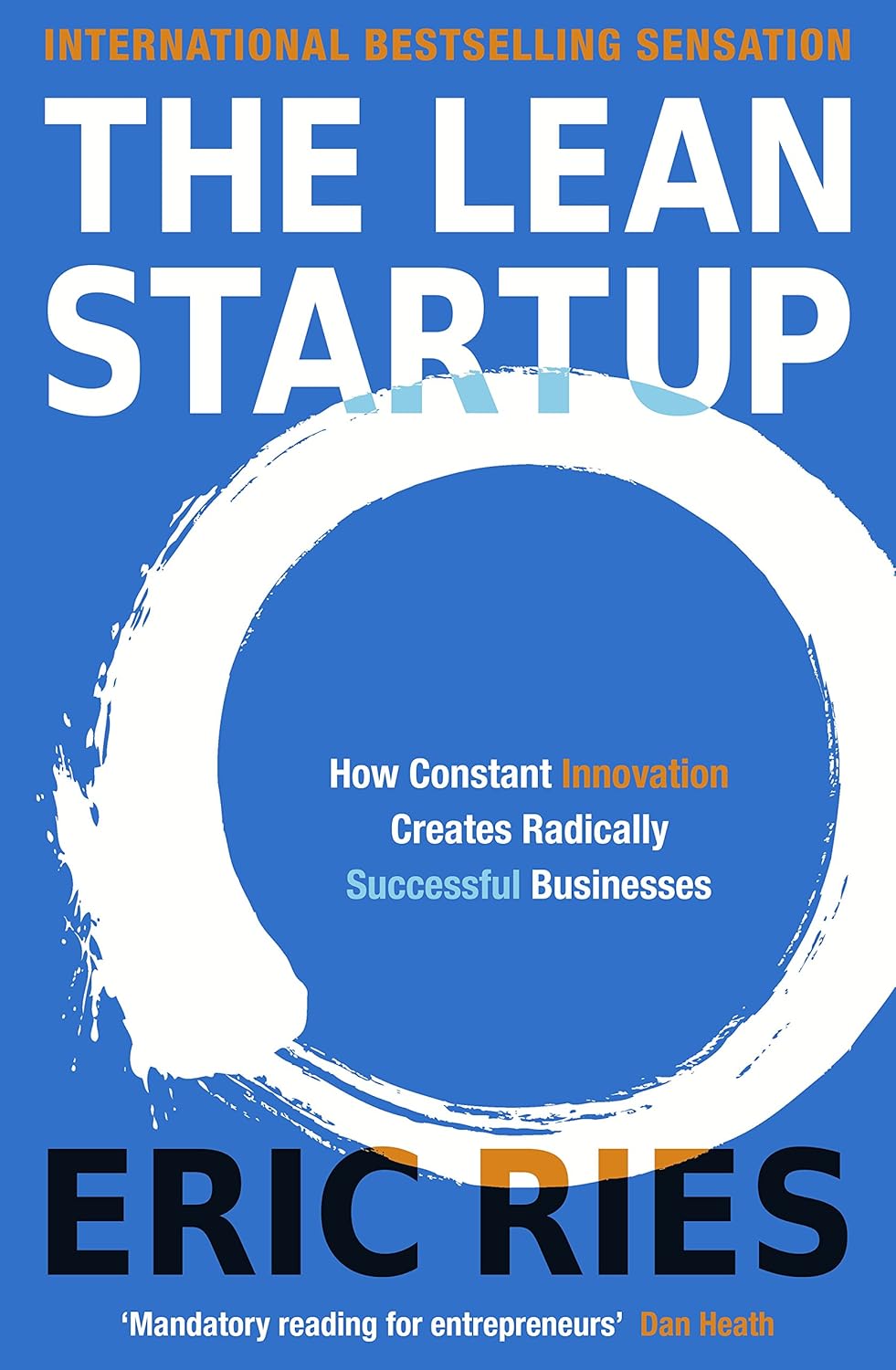
About the Book
Eric Ries built The Lean Startup around a simple but radical premise: most startups fail not because they build bad products, but because they build products nobody wants — often after months or years of work based on assumptions never actually tested. Drawing on his own experience as an entrepreneur and on lean manufacturing principles, Ries lays out the “build-measure-learn” feedback loop, the concept of the minimum viable product, and a rigorous approach to validated learning that lets founders test their core assumptions quickly and cheaply, rather than betting everything on an unproven idea.
Why Readers Love This Book
- A million-copy bestseller that fundamentally reshaped how modern startups are built
- Introduced concepts — minimum viable product, build-measure-learn — that are now standard startup vocabulary
- Grounded in Eric Ries’s own real entrepreneurial failures and successes, not just theory
- Applicable beyond startups — widely used inside larger companies for new product development
Who Should Read The Lean Startup
Essential for founders, product managers, and anyone building something new under uncertainty — a foundational text for startup methodology that’s also widely applied inside established companies launching new products.
About the Author
Eric Ries is an entrepreneur and author who developed the Lean Startup methodology, now widely taught in business schools and applied across the startup and corporate innovation world.
Frequently Asked Questions
Is The Lean Startup only useful for tech startups?
No — while it originated in the tech startup world, its build-measure-learn methodology is widely applied across industries and inside larger companies developing new products.
What is a minimum viable product, as defined in this book?
It’s the simplest version of a product that lets a team test their core business assumptions with real customers, before investing in a fully built-out product.
Do I need a business background to understand this book?
No — it’s written accessibly for founders and product builders at any experience level.
Is The Lean Startup still relevant given how much the startup world has changed?
Yes — its core framework around validated learning and rapid iteration remains foundational to modern startup and product development practice.
Specifications
| Title | The Lean Startup: The Million Copy Bestseller Driving Entrepreneurs to Success |
| Author | Eric Ries |
| Publisher | Portfolio Penguin |
| Publication Date | 6 October 2011 |
| Language | English |
| Binding | Paperback |
| Pages | 336 |
| ISBN-10 | 0670921602 |
| ISBN-13 | 978-0670921607 |
| Weight | 412 g |
| Dimensions | 15.3 x 2.6 x 23.3 cm |
| Genre | Business & Entrepreneurship |
People Also Ask
What does ‘build-measure-learn’ mean in The Lean Startup?
It’s the core feedback loop the book teaches: build a minimum version of an idea, measure how real customers respond, and learn from that data before deciding what to build next.
Is The Lean Startup similar to Zero to One by Peter Thiel?
Both are influential startup books, though The Lean Startup focuses on iterative, customer-validated product development, while Zero to One focuses more on building genuinely novel, monopoly-level businesses.
Has Eric Ries written other books since The Lean Startup?
Yes — he has written further books extending Lean Startup principles to larger organizations and long-term company building.
Reviews
There are no reviews yet.